

Schule für Architektur Saar
The master’s program is open to students who have successfully completed a bachelor’s or diploma degree in architecture. The master’s program builds upon the Bachelor of Arts in Architecture (B.A.) degree and is open to students from other universities who hold a BAA degree. The master’s program lasts four semesters; students with a Diplom degree may have up to one semester of coursework credited toward the program. After three semesters of design studios and advanced courses, the program concludes with a one-semester master’s thesis. With six bachelor’s semesters and four master’s semesters, the consecutive program has a total duration of 10 semesters. The master’s program can also be completed on a part-time basis, with a correspondingly longer duration of study. The degree awarded upon completion of the master’s program is the “Master of Arts.”
The master’s program is designed to facilitate in-depth study and specialization in specific subject areas and fosters interdisciplinary skills. The program focuses on the academic and artistic exploration of urban, architectural, and object-oriented space and its constructive design. A particular emphasis is placed on the architect’s role in an era of structural and demographic change in society as well as urban conversion. The program aims to foster the development of independent individuals who are characterized by interdisciplinary, collaborative, and creative thinking and action.
Basic Structure of the Master’s Program
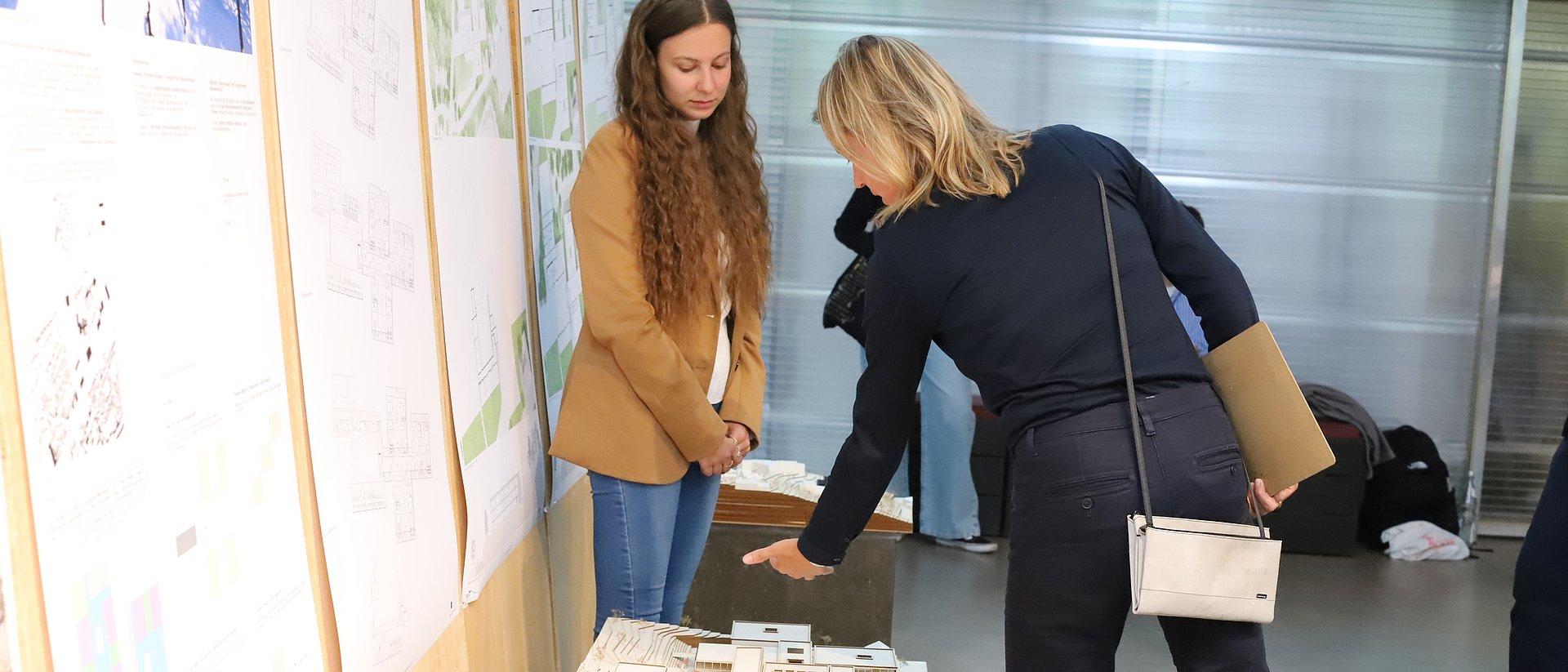
The Master’s program is designed as a project-based program. In the Master’s program, design is taught as a core competency. Consequently, design studios form the backbone of the program and are supplemented by lectures, seminars, and exercises. The course content is offered as a supplement or extension to the studio design work and is structured in a modular format. Students can choose a specialization through alternative semester offerings.
Interdisciplinary and International Focus
The master’s program offers an internationally recognized degree, thereby facilitating a move abroad, whether for study or work.
The project-based curriculum is enriched by interdisciplinary and international collaboration between the School of Architecture Saar (SAS) at htw saar and other local, regional, and international universities. Long-standing partnerships exist with the Saar College of Fine Arts (HBK Saar), Saarland University, and the Ecole d’Architecture de Nancy.
Career Opportunities and Prospects
The master’s degree, which is a prerequisite for eligibility for registration with the Chamber of Architects, is based on a standard period of study of 10 semesters and thus complies with UIA regulations. Graduates are therefore qualified for the following:
The strong practical focus and interdisciplinary orientation of the master’s program enable graduates to begin working immediately in architectural firms, construction companies, and other industries.
The requirements for university admission are governed by the General Study and Examination Regulations (ASPO) of htw saar, as well as the Saarland State Admission Regulations.