

The aim was to show pupils in grades 8 to 10 in a playful way how basic computer functions can be understood - through their own experimentation and tinkering.
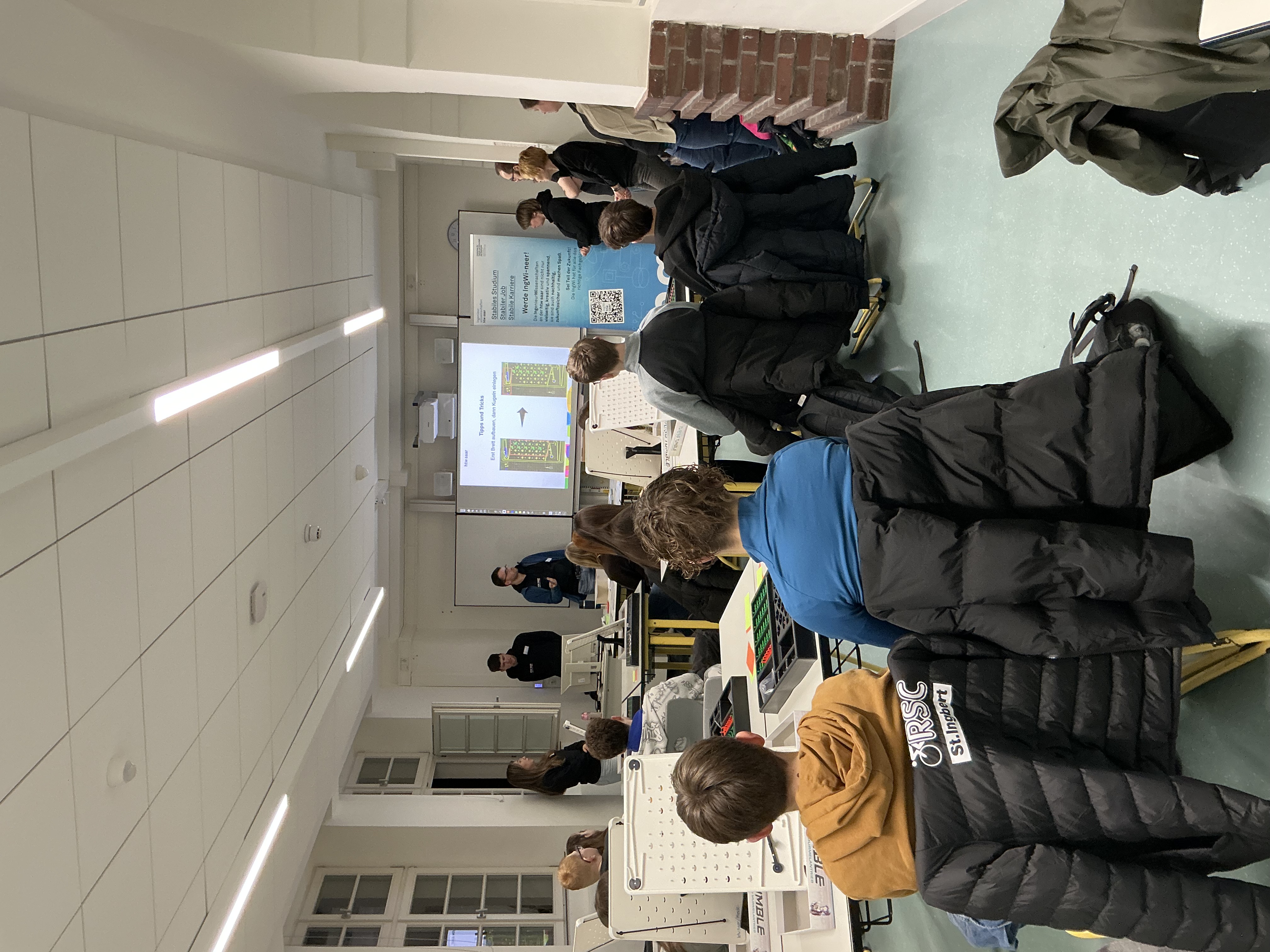
As a central element, we used the game Turing Tumblewhich is used to build mechanical computers in which falling balls work instead of code. At the beginning, we used a presentation to explain the most important components of the game, such as falling targets, crossings, bits and catchers. These were explained using simple examples so that the students could quickly understand how the balls run through the system and how the arrangement of the parts can be used to control the path of the ball. It was not about technical terms, but about the principle: What happens if I change something here? Where does the ball then go?
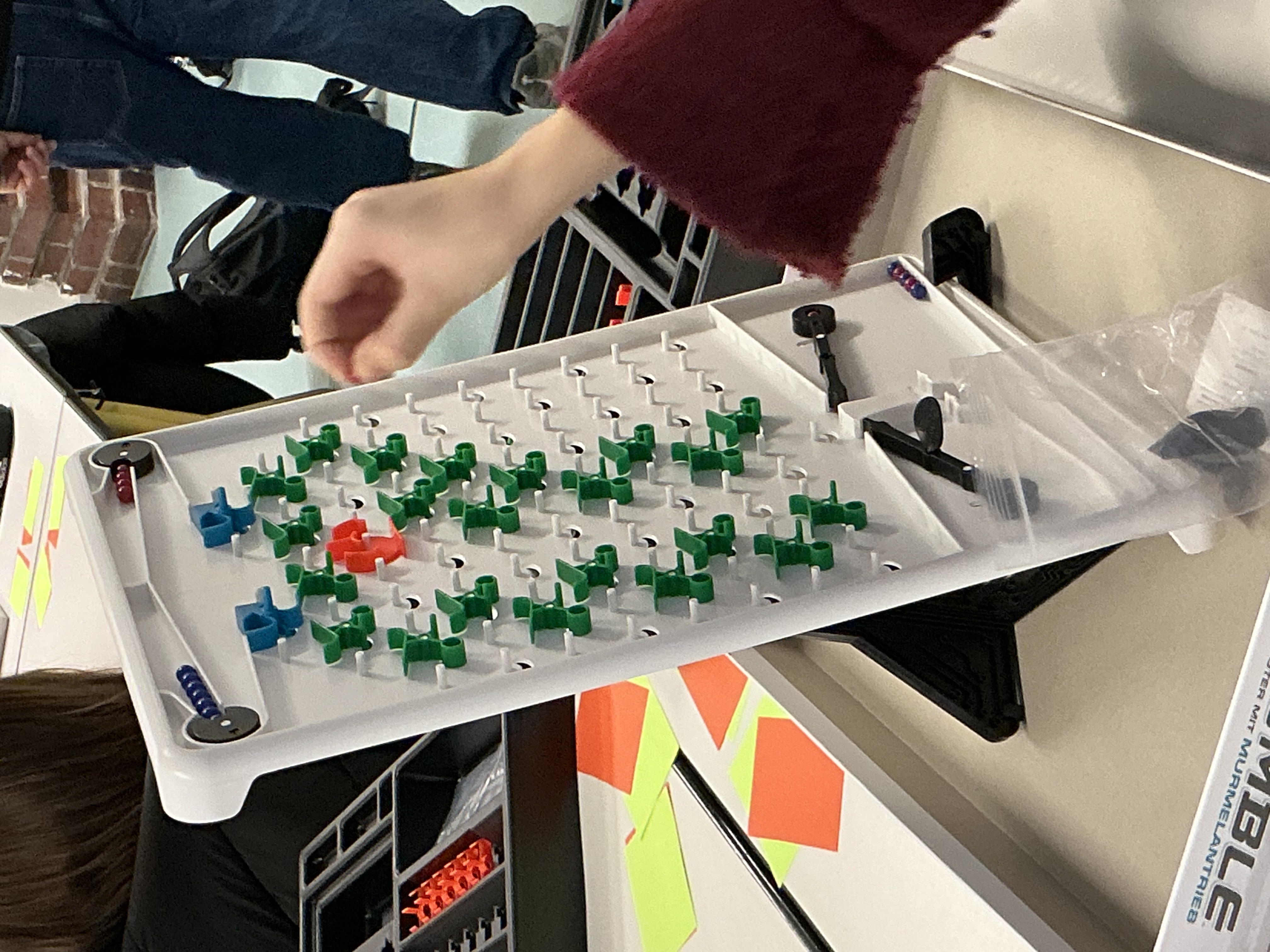
After the introduction, the practical part began. The students were given puzzles with different levels of difficulty. In small groups, they built their solutions on the game boards and tested them with the balls. The tasks gradually became more difficult so that everyone could take part and still have new challenges. The pupils were engaged right from the start. They tried out lots of things, closely observed how the balls ran and changed their set-ups if something didn't work. There was a lot of discussion, laughter and thinking together. It was particularly nice to see that some groups came up with their own creative solutions that still led to the right result.
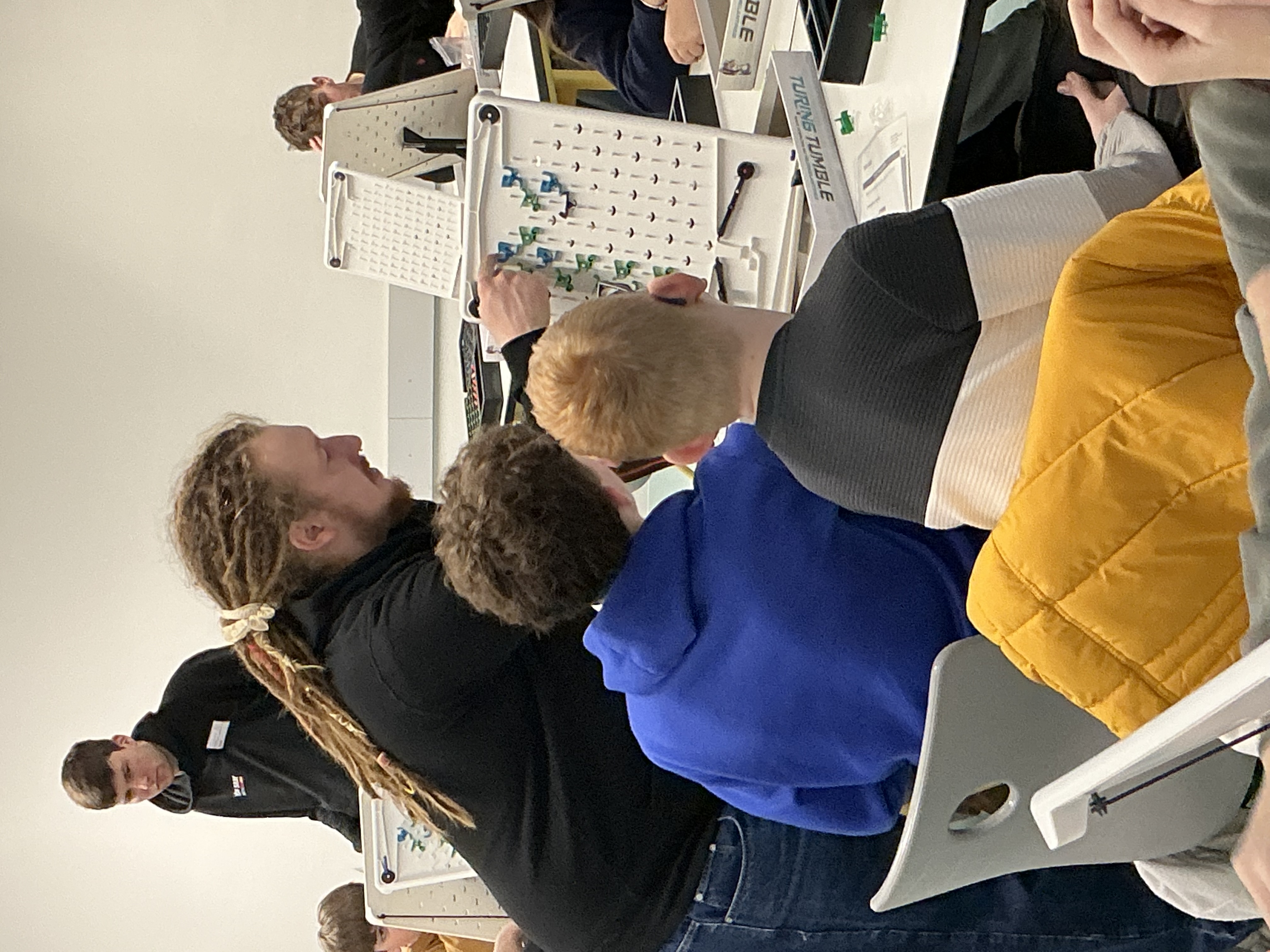
Overall, the pupils clearly enjoyed the workshop. They actively participated, helped each other and were highly motivated. For us as students, it was a very successful day in which we were able to experience how well technology and logical thinking can be taught in a playful and understandable way.