
We are using cookies.

We are using cookies on this web page. Some of them are required to run this page, some are useful to provide you the best web experience.

I accept

Individual Cookie Settings

Only accept required cookies.

Privacy Notes Imprint

Privacy settings

Here is an overview of all cookies use

Cookies for Statistics

Statistic cookies anonymize your data and use it. These information will help us to learn, how the users are using our website.

Show Cookie Informationen

Google Conversion-Tracking-Tag

Save

BackOnly accept required cookies.

Privacy Notes Imprint

  • Jump to main menu
  • Jump to side menu
  • Jump to content
  • Jump to footer
  • Contrast
  • de
  • en
Logo htw saar – To homepageLogo htw saar – To homepage
Search
  • Nachhaltigkeit
  • Sustainability in a nutshell
  • Organisation
  • Studium und Lehre
  • Forschung und Transfer
  • Soziale Nachhaltigkeit und Engagement
  • Contact
  • Locations
  • Library
  • Canteen menu
  • Moodle
 
  • htwsaar
  • Nachhaltigkeit
  • Soziale Nachhaltigkeit und Engagement

Social sustainability is an integral part of htw saar’s identity. Learning is understood as a social process supported by a vibrant social space. Here, people from diverse backgrounds, with varied experiences and perspectives, come together to learn from and with one another and to actively shape their study and work environment. We view this diversity as a great opportunity—it shapes our shared community and strengthens the university in its social responsibility. To live up to this responsibility, htw saar has deliberately created structures that enable participation, provide support, and promote equal opportunities. External certifications, such as that of a Fairtrade University, confirm this commitment. A wide range of counseling, service, and continuing education offerings supports students and staff in various life and developmental situations.

Read moreThe social partnership between the university as an employer and the staff councils plays a central role in this. Together with management, they establish reliable frameworks for good working conditions, staff development, and work-life balance. Through transparent procedures and advisory support, the Human Resources department contributes significantly to a respectful and equitable work environment.

A central guiding framework for our interactions is the Code of Conduct, which translates the values of the Teaching Mission Statement into clear behavioral guidelines and strengthens an inclusive, respectful, and discrimination-free university climate. Supplementary service agreements—such as those regarding working hours, remote work, and inclusion—create reliable conditions that support the balance between work and family life. In parallel, a wide range of counseling and support services is available, ranging from academic planning and financial and family matters to psychological and psychotherapeutic counseling, as well as efforts to remove barriers to studying. Parent-child rooms at the Alt-Saarbrücken and Rotenbühl campuses, partnerships with the Hohenzollern daycare center in Alt-Saarbrücken, and children’s vacation programs help make everyday university life family-friendly.

The htw saar also sets clear priorities in the areas of internal qualification (iQ) and lifelong learning: This includes the widely used iQ continuing education program with thematic workshops and the “WissenKompakt” format, through which departments present their services. These initiatives strengthen the professional and personal development of staff members. International Weeks and job shadowing complement this offering by providing insights from other university cultures, expanding the intercultural competencies of university members, and fostering a global understanding of sustainable development. Additionally, the StudiumPlus program offers students the opportunity to more closely integrate theory and practice and to specifically develop competencies through additional, extracurricular, and interdisciplinary learning modules.

The following key thematic areas, which are particularly influential in shaping our understanding of social sustainability, are presented in more detail below: equal opportunity and diversity, student engagement, internationalization, and health and well-being. While all offerings are initially designed as services for university members, they also have a far-reaching impact on society through graduates and partnerships with other companies and institutions.
Topic Areas

htw saar has established gender equality and diversity as central components of sustainable university development. The President is primarily responsible for the strategic direction, implementation, and ongoing development of related measures. Through the Equality Monitor, the Women’s Advancement Plan, and the equality concepts, long-term structures are created that ensure equal opportunities. These include the promotion of women in higher education and research, the compatibility of studies, work, and research with caregiving responsibilities, raising awareness of gender and diversity issues, the targeted promotion of young women in STEM fields, the establishment of support structures, and financial support measures. The university is also certified as a “family-friendly university,” promotes diversity through initiatives such as the “Shaping Diversity” audit, and has benefited from funding for five professorships to date through the federal government’s Women Professors Program (III and 2030). In this way, htw saar combines sustainable structures with individual support, guidance, and counseling.

For more details, visit www.htwsaar.de/gleichstellung 

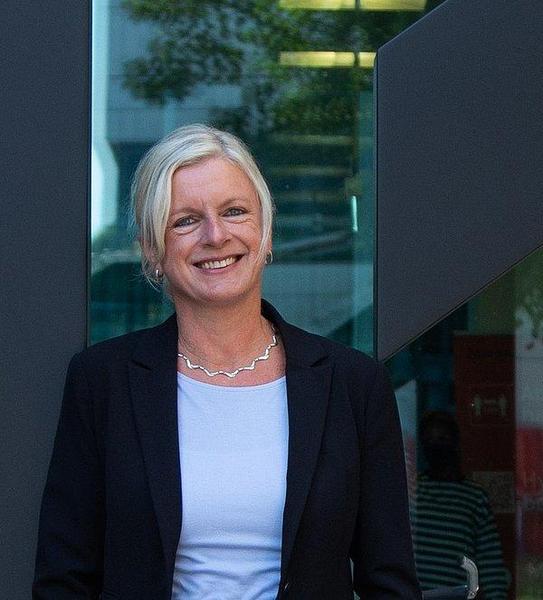
“A diverse university thrives when everyone can contribute their full potential. To this end, we at htw saar create conditions that strengthen participation, value differences, and take individual life circumstances into account.”

Ricarda Jacob, M.A. – Chief Equal Opportunity Officer

The idea for the “Sustainability Reporter” project emerged in 2022 during a discussion held as part of a sustainability module. The background was that, on the one hand, operational and structural shortcomings were obvious to students, while strengths in the areas of research, teaching, and social initiatives were not immediately apparent. After a technical introduction to the basics of journalism, student reporters research and document projects, initiatives, and measures that contribute positively to achieving the 17 UN Sustainable Development Goals. In interviews with project leaders, they discuss hydrogen as an energy source, ethical responsibility in business, mentoring models for high school students, gender equality in the workplace, and educational initiatives in socially disadvantaged neighborhoods—thus providing reports from the university, by students, for students. 

For more details, visit www.htwsaar.de/nachhaltigkeitsreporter 

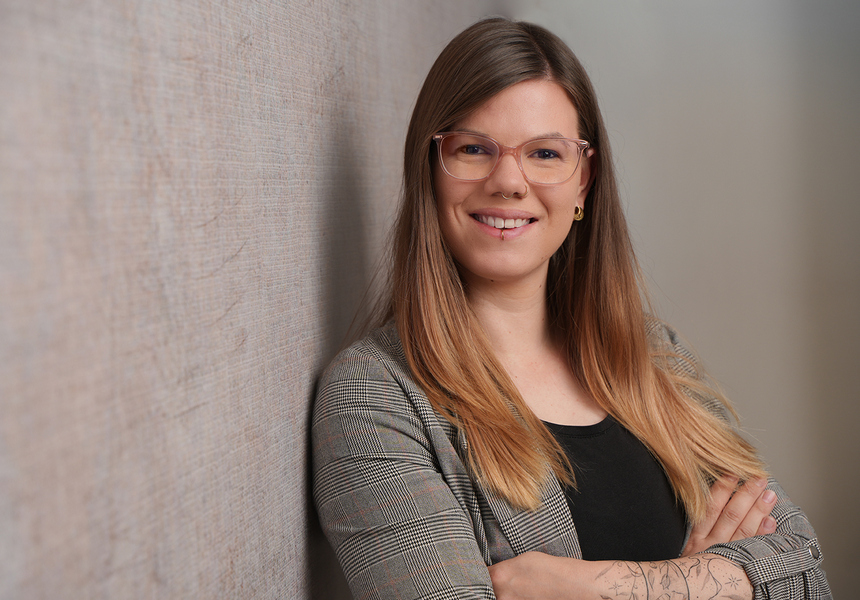
“It was super exciting to find out where sustainability is woven into every part of the university. It was fun to get to the bottom of it from a student’s perspective.”

Sustainability reporters Linda Herrmann and Jana Bauer.

Internationality is a central component of teaching and campus life at htw saar. About 22 percent of full-time students hold a foreign passport, and 12 percent obtained their university entrance qualifications abroad. In addition, the university welcomes numerous international students each year for at least one exchange semester, particularly through programs such as Erasmus+ or collaborations with partner universities like the German-French University Institute (DFHI/ISFATES). At the same time, students are regularly sent abroad for one or more semesters, for example to pursue dual degrees. A comprehensive range of language courses, including German as a foreign language, supports this mobility and facilitates integration. 

In addition, the university offers special programs for refugees, including academic preparation and buddy programs that promote equal opportunity. One example is the student project “Orient meets Occident,” which has been supporting Arabic-speaking students as they begin their studies since 2019. Initiator Fadi Othmann received the Saarland Special Award for Student Engagement in 2025 for this project. As part of the joint project “QUAZAR – Qualification and Labor Market Integration of International Skilled Workers,” implemented in collaboration with Saarland University and funded by the DAAD, htw saar contributes to the sustainable qualification and integration of skilled workers.

For details, visit www.htwsaar.de/int/international-office

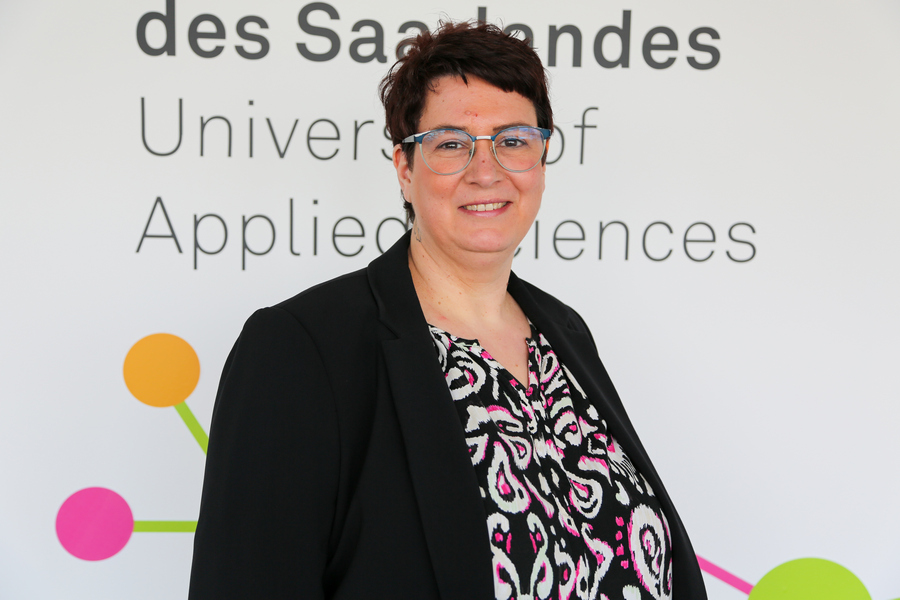
“International students enrich our campus both academically and culturally. Our task is to offer them guidance, support, and a warm, welcoming environment so that their time studying here becomes a true experience of participation.”

Norma Dettloff, M.A. – Support for international degree-seeking students

In 2018, a Workplace Health Management (WHM) program was established at htw saar under the purview of the Vice President for Administration and Financial Management: The WHM coordinator oversees the development of a needs-based WHM concept for systematic health promotion and coordinates the planning, implementation, and evaluation of key initiatives. In 2020, the Health Steering Committee was also established. It brings together representatives from university administration, the staff council, the human resources department, the representative body for employees with severe disabilities, the office of equal opportunity, occupational safety, university sports, the family office, and human resources development, as well as external experts, and shapes the strategic direction of the OHM. Among its tasks was the implementation and evaluation of the risk assessment for psychological stress, which took place in 2020/21 and 2025 and from which concrete measures were derived and implemented. 

htw saar offers its employees a wide range of health-promoting services: flu vaccinations, preventive eye exams, seminars on topics such as stress management and communication, team workshops, psychological counseling services, ergonomic workplace adjustments, leadership development programs, university sports, and regular health days. These offerings are complemented by coaching and professional development programs for managers, individual health counseling, and smaller initiatives such as water bottles featuring htw saar’s corporate design.

For details, visit www.htwsaar.de/hochschule/arbeiten-an-der-htw-saar/gesunde-hochschule 

“Health in the workplace is more than just preventing work-related disability. It is the foundation for motivation, performance, and quality of life. The focus is on the individual.”

Sabrina Wahlster, B.Sc. – Occupational Health Management (BGM)

Auszeichnungen und Partner der htw saar

footer area

  • Impressum
  • Datenschutz
  • Erklärung zur Barrierefreiheit
  • Cookiesettings

Socialmedia

  • Facebok
  • Instagram
  • LinkedIn
  • youtube
  • flickr
  • blog

Contact us

Saarland University of Applied Sciences

Goebenstraße 40
66117 Saarbrücken

Telephone: (0681) 58 67 - 0
Fax: (0681) 58 67 - 122
E-mail: infonoSpam@noSpamhtwsaarnoSpam.de

Locations

  • Campus Alt-Saarbrücken
  • Rotenbühl Campus
  • Campus Göttelborn
  • HTZ at the Saar Innovation Campus

htw saar

  • Press releases
  • Announcements
  • Semester dates/lecture times
  • Working at the htw saar
  • First aid / fire protection
  • Occupational health and safety (AGUM)
  • IT emergencies
  • Radiation and laser protection
  • Webmailer
  • Intranet (for employees)
  • Login (for employees)

Supervisory authority:
Saarland Ministry of Finance and Science