
We are using cookies.

We are using cookies on this web page. Some of them are required to run this page, some are useful to provide you the best web experience.

I accept

Individual Cookie Settings

Only accept required cookies.

Privacy Notes Imprint

Privacy settings

Here is an overview of all cookies use

Cookies for Statistics

Statistic cookies anonymize your data and use it. These information will help us to learn, how the users are using our website.

Show Cookie Informationen

Google Conversion-Tracking-Tag

Save

BackOnly accept required cookies.

Privacy Notes Imprint

  • Jump to main menu
  • Jump to side menu
  • Jump to content
  • Jump to footer
  • Contrast
  • de
  • en
Logo htw saar – To homepageLogo htw saar – To homepage
Search
  • Nachhaltigkeit
  • Sustainability in a nutshell
  • Organisation
  • Studium und Lehre
  • Forschung und Transfer
  • Soziale Nachhaltigkeit und Engagement
  • Contact
  • Locations
  • Library
  • Canteen menu
  • Moodle
 
  • htwsaar
  • Nachhaltigkeit
  • Forschung und Transfer

The goal of research at htw saar is to develop solutions to key societal challenges such as climate change, resource conservation, and social responsibility. This is achieved most effectively through a holistic, transdisciplinary approach. With its four faculties—Architecture and Civil Engineering, Engineering Sciences, Social Sciences, and Economics—htw saar offers the ideal conditions for this. Sustainability is thus examined and implemented from technological, economic, social, and design perspectives.

Read moreWe view sustainability as a cross-cutting task that is embedded in numerous research projects and fields. In close collaboration with partners from industry, government, and civil society, scientific findings are translated into practical applications. Students, doctoral candidates, staff, and partners actively contribute to the development of sustainable solutions, thereby strengthening innovation capacity and regional value creation. As a university and a social actor, we contribute to ecologically, economically, and socially sustainable transformation through interdisciplinary collaborations, application-oriented projects, and our commitment.

A significant portion of our research activities takes place within the framework of international cooperation projects, such as EU-funded INTERREG programs. Together with partners from the Greater Region, we develop sustainable solutions for cross-border challenges, for example in the areas of climate-friendly mobility, energy supply, or socio-spatial development. Our projects also provide strong impetus with regional impact within the Saarland Transformation Fund. They address future-oriented topics such as energy efficiency, digitalization, health, the mobility transition, and resilient infrastructure, and, together with partners, translate scientific findings into concrete applications.

Through the university’s internal seed funding program, professors are supported with start-up funding for innovative projects. Key selection criteria include the project’s innovative content and societal relevance, knowledge and technology transfer, as well as its scalability and contribution to addressing societal challenges (megatrends).

Key future-oriented topics are addressed in the centers of excellence that have been systematically established since 2021. The interdisciplinary research clusters Future Transportation Society (FTS), Digital Neurotechnologies (CDNS), Flow and Simulation Technology (KoS), and Climate Impact Adaptation and Disaster Management (KoK2) make direct and indirect contributions to sustainable development. This network is complemented by affiliated and associated institutes such as the Institute for Future Energy and Material Flow Systems (IZES gGmbH), which build important bridges between research, industry, and society.

Spin-offs from htw saar are a key driver of knowledge transfer and innovation. Many startups emerge directly from applied research. An outstanding example is VENSYS Energy AG, which was founded in 2000 as a spin-off of the Wind Energy Research Group at htw saar and has developed into an internationally active developer and licensor of gearless wind turbines.

Those interested in starting a business are supported at htw saar through consulting, mentoring, and targeted communication initiatives. The transfer fair “knowhow@htw saar” showcases current research projects and promotes exchange with industry and society, supported by formats such as the research magazine “sichtbar.”

This page presents examples of transdisciplinary projects with a sustainability focus from the INTERREG funding line, the Transformation Fund, and the centers of excellence.
Sample Projects

Through the Interreg VI-A project INCLUREG, htw saar is working with partners from the Greater Region to promote the sustainable improvement of employment opportunities for people with disabilities in the open labor market. The goal is to promote inclusive employment models, prepare workshops for people with disabilities for the future, and strengthen cross-border exchange. The focus is on training, digitalization, and innovative logistics solutions—particularly in the field of Industry 4.0. To this end, existing structures are analyzed, best practices are identified, and these are tested in pilot projects. Workshop employees receive targeted training to keep pace with technological developments and tap into new fields of employment. As the lead partner, htw saar coordinates the activities of a total of seven financial and ten strategic partners from Germany, France, Luxembourg, and Belgium. This close collaboration yields concrete recommendations for action and regional implementation plans aimed at establishing inclusive work structures for the long term. In this way, INCLUREG actively contributes to greater social participation, securing a skilled workforce, and sustainable development in the Greater Region.

For more details, visit www.inclureg.eu

Logo des Interreg Projekts Inclureg

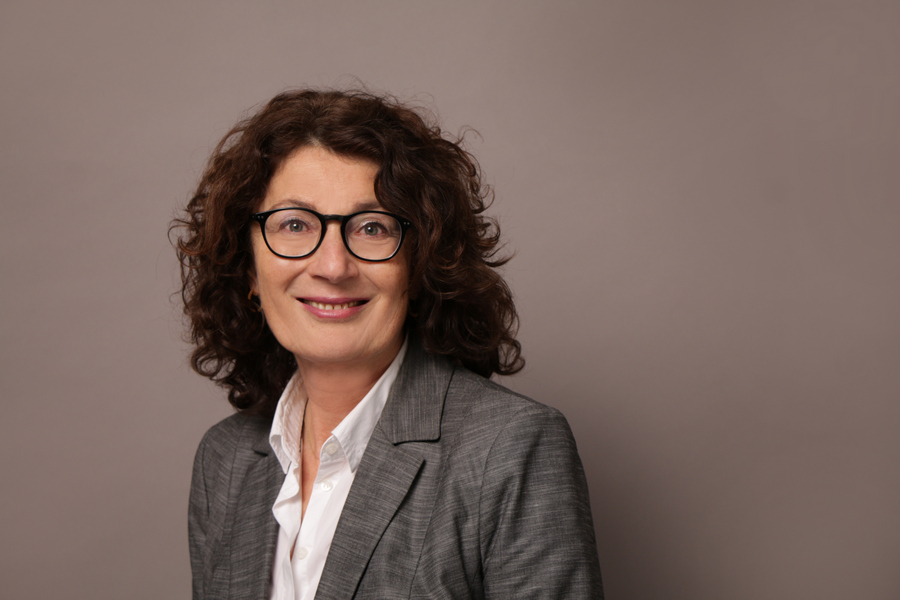
“There are reasons why people with disabilities do not enter the primary labor market. One of the reasons is the lack of permeability in workshops for people with disabilities. We are working together with the workshops in the Greater Region to improve this, including with the help of new technologies.” 

Prof. Dr. Kerstin Rock,
Chair of Interaction and Organization in Social Work

The cross-border Greater Green+ project supports the sustainable transformation of the Greater Region by connecting stakeholders from business, research, and the public sector in the field of green tech. The goal is to highlight, further develop, and implement innovative solutions to environmental challenges. Key focus areas include renewable energy, sustainable construction, recycling, water and environmental technologies, and the bioeconomy. 

Through workshops, specialist events, working groups, and digital exchange formats, Greater Green+ promotes knowledge transfer and cross-border cooperation. A digital platform that brings together sustainable technologies, expertise, and opportunities for cooperation plays a central role in this effort. htw saar contributes its application-oriented research and close ties with regional companies, serving as a key interface between academia and industry. In this way, the project helps strengthen innovation, resource efficiency, and environmental responsibility in the region.

For more details, visit https://interreg-gr.eu/de/project/greatergreen-de 

Logo des Interreg Projekts Greater Green Plus

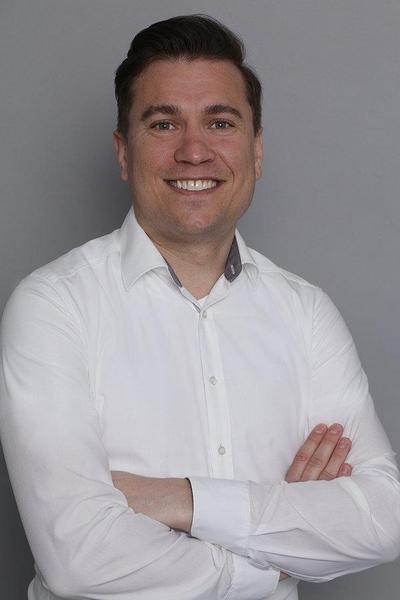
“Greater Green+ demonstrates how cross-border collaboration accelerates innovation. The project bridges research and practice and makes sustainable technologies concretely usable for companies.”

Prof. Dr. Pascal Stoffels,
Chair of Production Informatics

The Center of Excellence for Climate Impact Adaptation and Disaster Management at htw saar (KoK²) brings together scientific and technical expertise to address current and future climate risks. Its goal is to develop practical tools to strengthen climate resilience and disaster management in Saarland and to implement them at the local level.

The focus is on developing innovative methods to protect people, the environment, and infrastructure. To this end, a “Climate Hazard Defense System” (KliGAS) is being developed as an early warning system for natural hazards such as flooding and heavy rain. A special focus is placed on crisis prevention regarding critical infrastructure in the areas of energy and water supply as well as wastewater disposal. Close collaboration with ministries, municipalities, specialized agencies, and research partners ensures effective knowledge transfer into practice.

KoK² thus makes a significant contribution to sustainable development in Saarland—through prevention, protection, and adaptation in addressing the consequences of climate change.

For more details, visit www.htwsaar.de/kok2


Logo des htw Kompetenzzentrums KoK2

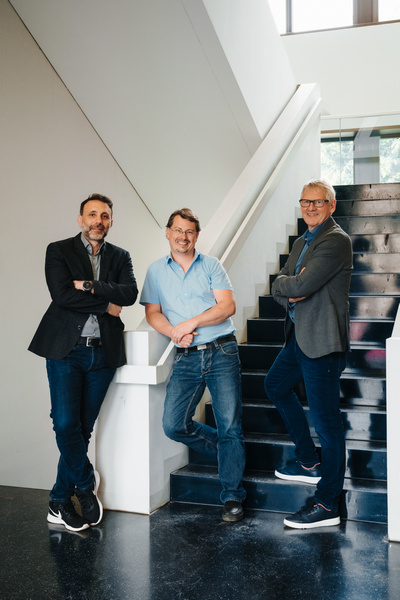
“We want to protect people and the environment from the consequences of climate change. To this end, we are researching new approaches and methods for crisis prevention and disaster management.”

Prof. Dr.-Ing. Alpaslan Yörük, Dipl.-Ing. (FH) Andreas Biehler, Prof. Dr.-Ing. Joachim Dettmar
KoK² Management Team

Our university plays a central role in expanding circular value creation. Together with the Fraunhofer Institute for Non-Destructive Testing (IZFP), it is establishing two collaborative research groups that are receiving 5 million euros in funding from the state. The focus is on the ECO² group, which is working on methods for ecological and economic optimization to ensure that products and technologies are optimally reused, repaired, or recycled throughout their lifecycle. This allows materials to be kept in the cycle in a targeted manner, waste to be reduced, and CO₂ emissions to be lowered.

htw saar is contributing its expertise in applied research, method development, and product and process optimization within the context of circular value creation. In doing so, it is strengthening its position as a driving force for sustainable products and industrial processes and promoting the training of skilled workers who will advance the transition to a circular economy.

For more details, visit www.eco2.htwsaar.de


Logo des Projekts Eco2

“We want to design technologies and processes in a way that combines ecology and economy—closing loops, reducing emissions, and simultaneously enabling sustainable value creation.” 

Prof. Dr.-Ing. Christian Köhler, MBA
Chair of Industrial Engineering

Auszeichnungen und Partner der htw saar

footer area

  • Impressum
  • Datenschutz
  • Erklärung zur Barrierefreiheit
  • Cookiesettings

Socialmedia

  • Facebok
  • Instagram
  • LinkedIn
  • youtube
  • flickr
  • blog

Contact us

Saarland University of Applied Sciences

Goebenstraße 40
66117 Saarbrücken

Telephone: (0681) 58 67 - 0
Fax: (0681) 58 67 - 122
E-mail: infonoSpam@noSpamhtwsaarnoSpam.de

Locations

  • Campus Alt-Saarbrücken
  • Rotenbühl Campus
  • Campus Göttelborn
  • HTZ at the Saar Innovation Campus

htw saar

  • Press releases
  • Announcements
  • Semester dates/lecture times
  • Working at the htw saar
  • First aid / fire protection
  • Occupational health and safety (AGUM)
  • IT emergencies
  • Radiation and laser protection
  • Webmailer
  • Intranet (for employees)
  • Login (for employees)

Supervisory authority:
Saarland Ministry of Finance and Science