
In the AFaktive project, researchers are developing, testing, and disseminating new approaches to improved water management through the implementation of agroforestry systems.
Agroforestry specifically combines trees and/or shrubs with traditional agriculture and can thereby improve the landscape’s water retention capacity. This results in effective protection against drought, erosion caused by heavy rain and wind, and flooding.
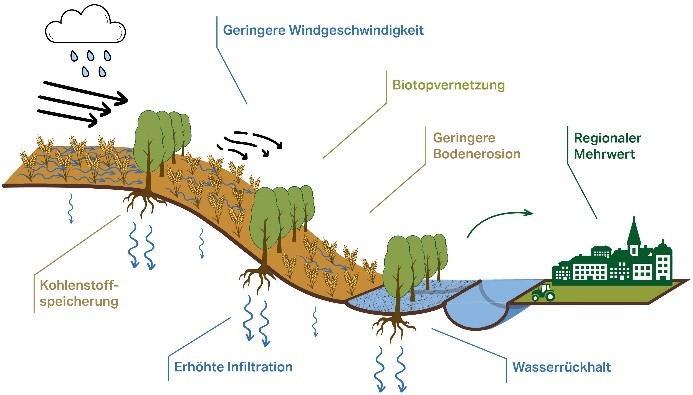
In this way, agroforestry increases the climate resilience of agriculture in Europe and equips people with additional tools to cope with the consequences of climate change. This is because current findings show that agroforestry has a demonstrably positive impact on both the water cycle and erosion and flood control. Based on these results, new, optimized agroforestry systems can be developed and implemented.
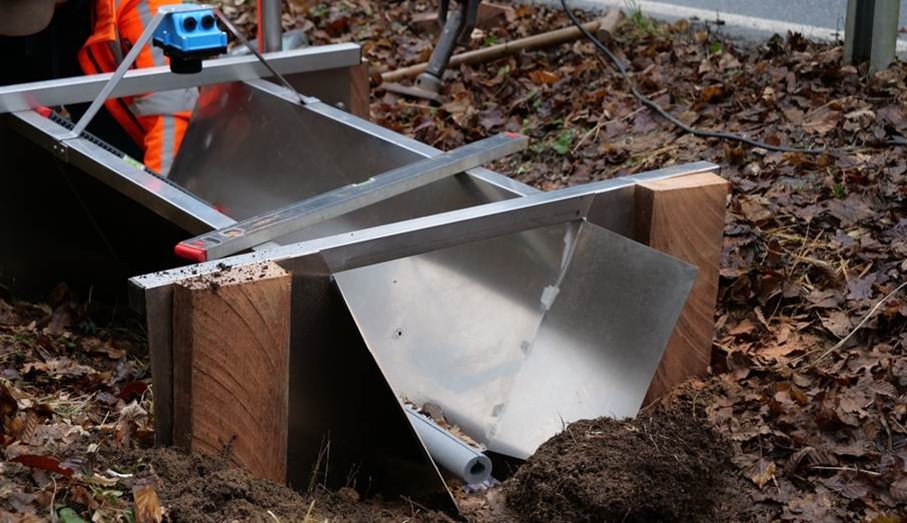
Currently, a large number of experimental plots in Germany, the Netherlands, and Belgium are being planted with rows of trees and equipped with measurement systems for research purposes (e.g., wind measurement, soil moisture, precipitation, runoff). Farmers continue to cultivate crops between the rows of trees. With the help of these measurements, the positive effects of the rows of trees on the water balance and erosion can be tracked over several years. Parameters for computational models can also be derived from the measurement data, which can be used to better plan agroforestry systems on future sites. Currently, the project is also planning an agricultural pilot site in Saarland, which will be used for both measurement and demonstration purposes related to agroforestry.